

What Is Poplin? The Weave Behind a Crisp Cotton Shirt
Written by Eleven Loves
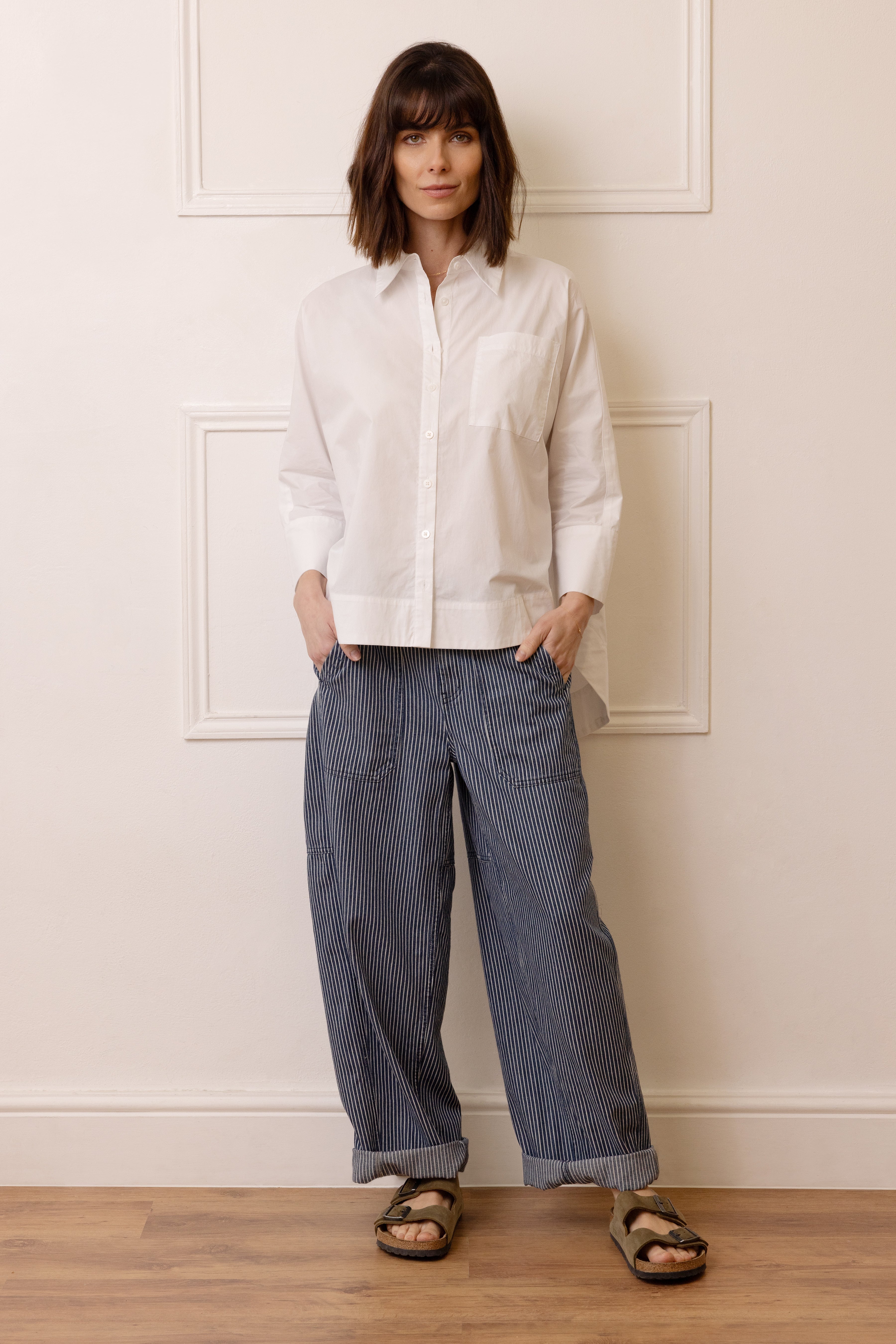
Poplin is the reason a good cotton shirt still looks sharp at six o'clock. It is not a fibre and it is not a finish. It is a weave, and once you understand what it does, choosing a shirt gets a great deal easier.
What is poplin?
Poplin is a plain weave cotton with a high thread count and a fine, tightly packed construction. One thread over, one thread under, repeated closely and evenly across the whole cloth.
That simple structure is what produces the character. Because the threads sit close together with very little space between them, the surface comes out smooth and flat, with a subtle sheen and no visible texture. There is no basket effect, no diagonal line, no slub. Just clean cloth.
The result is a fabric that is lightweight but structured. It has body without weight, which is a rare and useful combination in a shirt. It holds a collar upright. It takes a press and keeps it. It does not cling, and it does not collapse.

Where the name comes from
The word traces back to papelaine, a fabric woven in Avignon in the fifteenth century during the papal residence there. The original was a silk and wool blend, nothing like the cotton we use now, but the name travelled with the weave structure rather than the fibre. Modern poplin is almost always cotton or a cotton blend.
You will sometimes see poplin called broadcloth, particularly in American shirting. For most practical purposes they describe the same thing: a fine, tightly woven plain weave. Broadcloth tends to be used for the very finest and densest end of the range.
Poplin compared to other shirting fabrics
Most confusion about shirt fabric comes from the fact that the fibre is often identical. Two shirts can both be 100% cotton and behave completely differently, because the weave is doing the work.
Poplin and Oxford
Oxford uses a basket weave, where threads are grouped and crossed in pairs or fours rather than singly. That creates a visible, slightly checkerboard texture and a heavier, softer, more casual cloth. Oxford is the button-down shirt fabric. It is more forgiving of creases, and it is markedly less crisp.
Poplin is the smoother, finer, dressier of the two. If you want a shirt that reads as polished, poplin is the weave you want.
Poplin and twill
Twill is woven on a diagonal, which is why you can usually see a faint slanted line running across the cloth. That diagonal gives twill drape and a softer fall, and it resists creasing well. It is a lovely shirting fabric, but it hangs rather than holds.
Poplin stands where twill drapes. The difference is structure versus fluidity.
Poplin and chambray
Chambray is also a plain weave, but it is woven with a coloured warp and a white weft, which is what gives it that soft, denim-adjacent, slightly heathered look. It is softer, more relaxed, and it has none of poplin's crispness.
Poplin and linen
Linen is a different fibre altogether, and it creases as a matter of character rather than fault. Linen is for heat and ease. Poplin is for structure and polish.
Why poplin works so well for a shirt
Three things, and they compound.
It holds structure where structure matters. A collar, a cuff and a placket all need to stand up rather than flop. The close weave gives poplin enough body to do that without adding bulk or stiffness anywhere else.
It is breathable and light. A tight weave sounds like it would be airless, but cotton poplin is thin, and it moves air well. It is comfortable across seasons in a way heavier shirting is not.
It presses beautifully and stays pressed. The smooth surface takes an iron cleanly, and the tight construction means the shirt keeps that pressed appearance for hours rather than minutes.
The trade-off, and it is worth being honest about it, is that poplin does crease when it is packed or crushed. The same tight weave that holds a sharp line will hold a fold line too. Hang it rather than fold it, and it looks after itself.

How to choose a poplin shirt
Once the fabric is right, the decision comes down to cut.
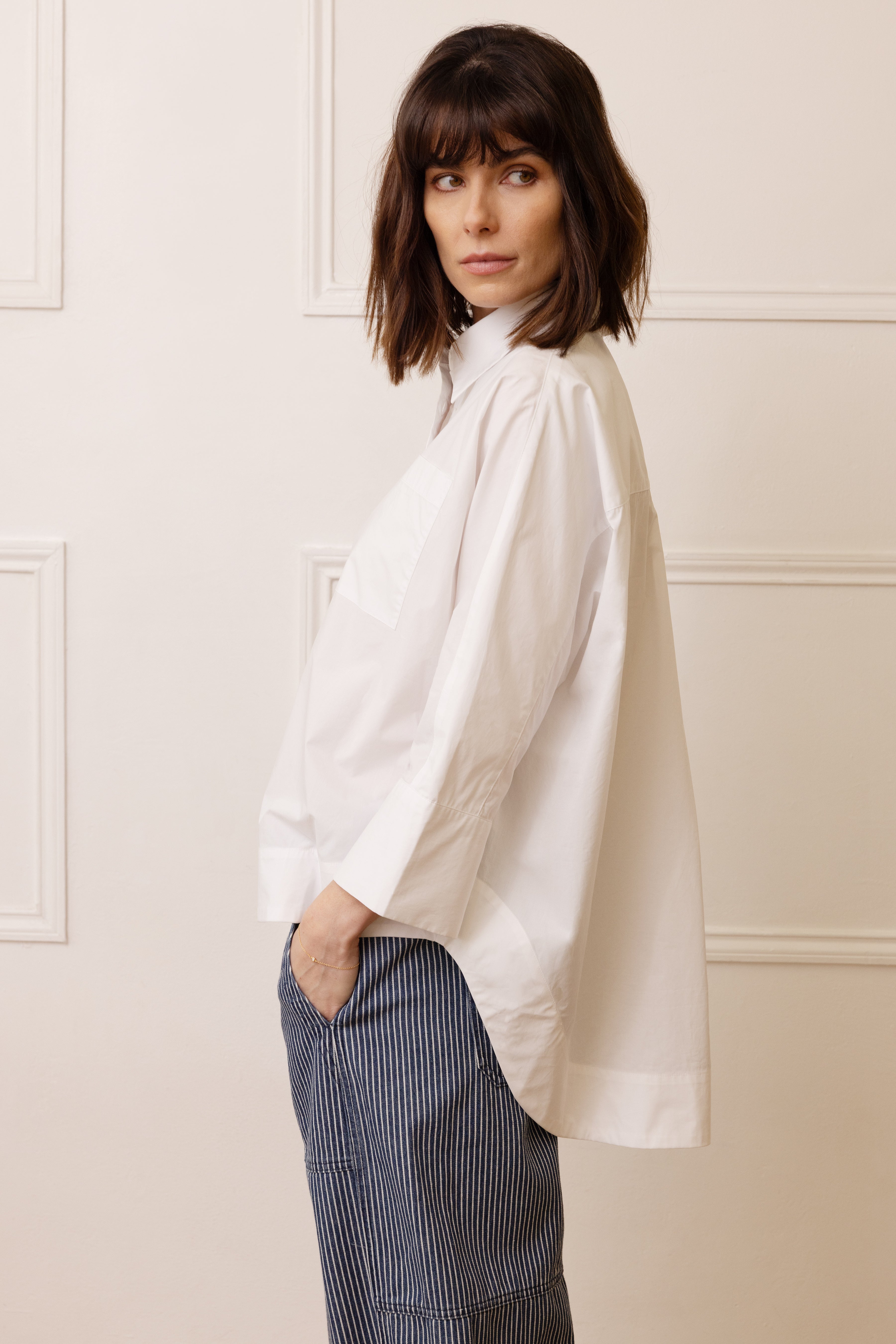
A deliberately oversized shirt uses poplin's structure to hold volume. The cloth is doing something specific: it keeps the shoulder line and collar sitting correctly while the body stays generous. A softer, drapier fabric would collapse into shapelessness at that scale. This is why the weave matters. Volume without structure is just a big shirt.
The Olivia Oversized Poplin Shirt in white is the clearest example. Curved dipped back hem, pleat detail and volume through the back, a slightly cropped front, deep cuffs with bracelet length sleeves. The poplin is what allows all of that to hold its shape rather than sag.
A classic-fit shirt uses the same weave for a different end: clean lines, a neat collar, a shirt that tucks flat. The Perfect Shirt in white is cut that way, with a structured collar, deep cuffs for rolling and a softly rounded hem.

On colour
Poplin's smooth surface takes colour cleanly, with no texture to break it up, which is why poplin shirts in soft colours look considered rather than washed out.
Ivory is softer against the skin than optic white and sits beautifully with warm neutrals. Powder blue is the quiet workhorse, and it is the colour that most reliably reads as polished without reading as formal. Pink is lovely against navy and denim.

When poplin is not the answer
If you want a shirt that flows and falls, poplin will fight you. That is a job for a drapier cloth. Our Olivia in blue chambray is cut from the same block but in lyocell, and it hangs where the poplin stands, which makes it the better choice worn open as a light layer.

How to care for a poplin shirt
Poplin is not high maintenance, but it does reward a little attention.
Wash at 30 degrees. Do not tumble dry, which is the fastest way to set creases into a tight weave and shorten the life of the cloth. Cool iron on the reverse while very slightly damp, which is when poplin presses best.
Hang rather than fold. A poplin shirt on a hanger will largely keep itself sharp. A poplin shirt at the bottom of a drawer will not.
If it has been packed, hang it in a steamy bathroom for ten minutes before you reach for the iron. Most travel creases will drop out on their own.
Common questions
Is poplin the same as cotton?
No. Cotton is the fibre. Poplin is the way the fibre is woven. Most poplin is cotton, but you can weave poplin in silk, wool or a blend, and you can weave cotton into Oxford, twill or chambray instead.
Does poplin crease?
Yes, when packed or crushed, and it holds a fold line for the same reason it holds a pressed line. Hung properly it stays smooth. Steam or a cool iron resolves it easily.
Is poplin good for summer?
Very. It is one of the lighter shirting weaves, and cotton poplin breathes well. It is a better hot-weather choice than Oxford or twill, though linen will always beat it for pure heat.
Is poplin smart or casual?
Both, and that is the point. The weave is inherently crisp, so it reads as polished. What decides the register is the cut and how you wear it. Fully tucked into tailored trousers it is a work shirt. One side tucked with jeans, or worn open over a vest, it is a weekend shirt.
Does poplin shrink?
Cotton poplin can shrink slightly on a first hot wash, which is why we recommend 30 degrees and no tumble drying.
The short version
Poplin is a tightly woven plain-weave cotton. It is smooth, light and structured. It holds a collar, takes a press and keeps a shirt looking sharp all day. It creases if you crush it, and it is happiest on a hanger.
If you want a shirt that looks pulled together without any effort on your part, this is the weave that does the work for you.
Explore our cotton poplin shirts, or read our guide on how to style an oversized shirt.

Leave a comment
This site is protected by hCaptcha and the hCaptcha Privacy Policy and Terms of Service apply.