


What Is Cashmere? Everything You Need to Know
Written by Eleven Loves

Cashmere is the fine, soft underlayer of hair combed from cashmere goats, most of which are raised across Inner Mongolia and Mongolia. The fibres are dramatically finer than standard sheep's wool, which is why cashmere feels so soft and light against the skin while being remarkably warm. It is rare, slow to produce and has been prized for centuries, which also explains the price.
This guide covers where cashmere comes from, how it is made, how it compares to wool, merino and lambswool, and why we knit our own cashmere blend jumpers in a 90 percent wool, 10 percent cashmere yarn.
What is cashmere made from?
Cashmere is not sheared like sheep's wool. It is the downy undercoat that cashmere goats grow to survive harsh winters, sitting beneath a layer of coarse outer guard hair. To qualify as cashmere, the fibre must be exceptionally fine, typically under 19 microns in diameter, which is a fraction of the width of a human hair. That fineness is the whole story. Finer fibres bend softly against the skin rather than prickling it, and they trap more air, which is what makes cashmere both softer and warmer than ordinary wool.
Where does cashmere come from?
Cashmere comes from the cashmere goat, and only the cashmere goat, unlike wool, which is produced by many breeds of sheep. The name comes from Kashmir, where the fibre was first woven into shawls centuries ago, but today the overwhelming majority of the world's cashmere comes from goats raised across Inner Mongolia, Mongolia and the surrounding regions of Central Asia. The extreme continental climate, with winters that fall far below freezing, is exactly what drives the goats to grow such a fine, dense undercoat. Each spring, as the goats naturally moult, the soft down is combed away by hand.

How is cashmere made?
Once combed, the raw fibre is sorted and washed, then put through a process called dehairing, which separates the fine down from the coarse guard hairs. Only then can it be spun into yarn, dyed and knitted. The yield is tiny. A single goat produces only around 150 to 200 grams of usable down each year, so one jumper can require the annual combing of several goats. That scarcity, and the amount of careful processing involved, is why genuine cashmere has never been cheap.
Why is cashmere so expensive?
Scarcity, mostly. The down can only be collected once a year during the spring moult, each goat yields a few hundred grams at most, and a good proportion of that is lost in dehairing and sorting. Add the skilled processing needed to turn such a fine fibre into a stable yarn, and the economics explain themselves. It is also why a very cheap jumper labelled 100 percent cashmere deserves a second look. At the bottom of the market, the price is usually achieved with shorter, weaker fibres that feel soft on day one but pill heavily and lose their shape quickly.
Is cashmere wool?
In the broad sense, yes. Wool strictly refers to the fibre of sheep, while cashmere is goat fibre, but both are natural animal hair fibres made of keratin and they behave in similar ways. They insulate beautifully, breathe well, resist odour and respond to the same gentle care. This close relationship is why wool and cashmere blend so successfully in a single yarn, with each fibre bringing something the other lacks.
Cashmere vs wool: what is the difference?
The difference comes down to the animal and the fineness. Wool comes from sheep and typically measures 25 to 40 microns, while cashmere comes from goats and sits under around 19 microns. That gap in fineness is why cashmere is softer, lighter and warmer for its weight, and why it costs more. Wool fights back with durability. Its natural crimp gives it elasticity and shape retention that cashmere cannot match, and it stands up to far more wear. Softness and warmth from cashmere, strength and structure from wool, which is precisely the logic of a 90/10 blend.
Is cashmere warm?
Yes, noticeably warmer than sheep's wool of the same weight. The fineness of the fibre allows it to trap far more insulating air relative to its bulk, which is why a lightweight cashmere jumper can feel as warm as a much heavier wool one. It is also breathable, so it regulates rather than overheats, making it comfortable indoors as well as out.
Is cashmere warmer than wool?
Weight for weight, yes. Because cashmere fibres are so much finer, a knit of the same thickness contains more fibres and traps more air, and it is that trapped air that does the insulating. In practice, a fine cashmere or cashmere blend jumper keeps you as warm as a chunkier lambswool one while feeling lighter and softer. Where sheep's wool wins is resilience. Wool fibres have more natural crimp and bounce, which is why they hold their shape so well, and it is exactly why blending the two fibres makes sense.

What is a cashmere blend?
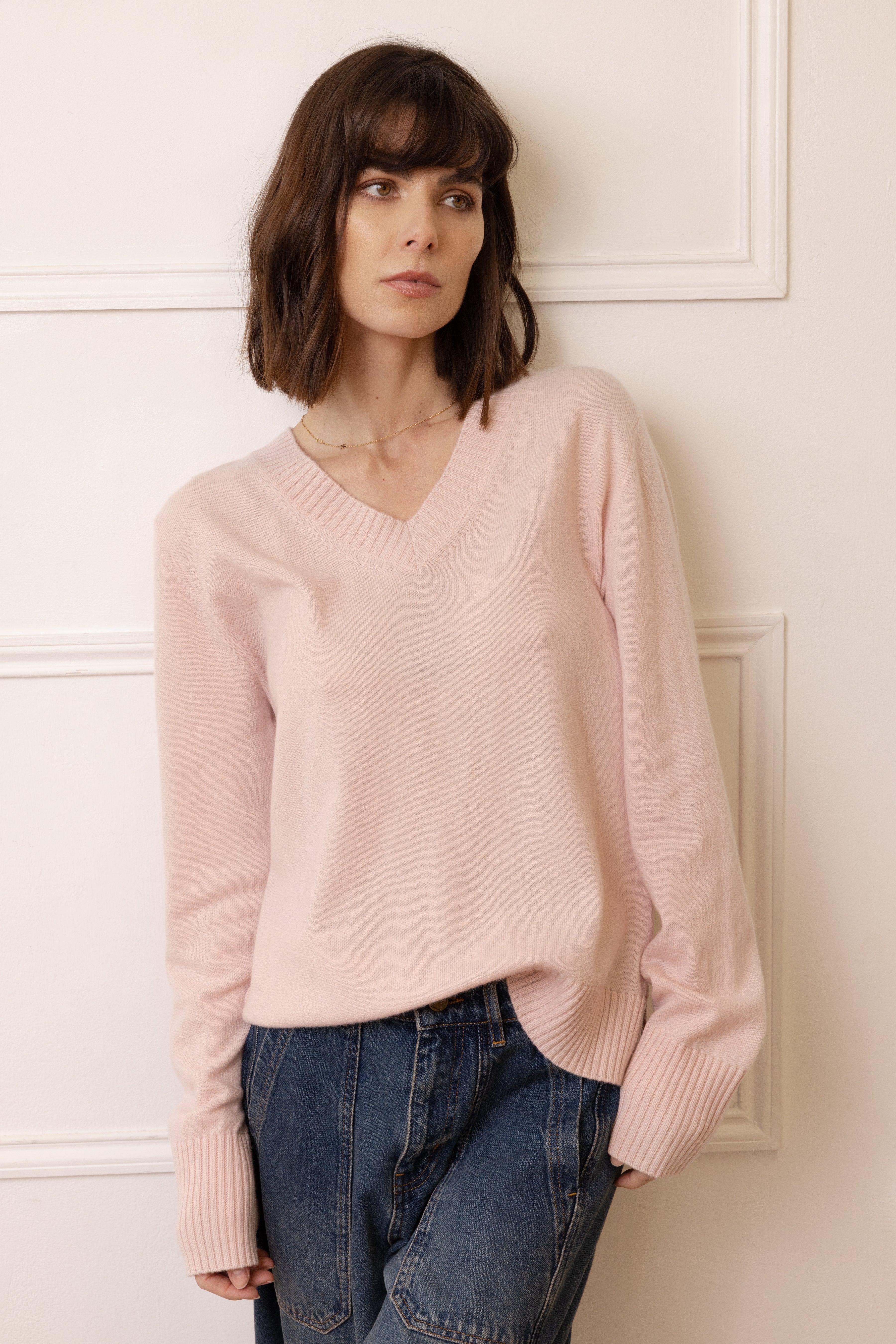
A cashmere blend is a yarn that combines cashmere with another fibre, most often fine wool. Ours is 90 percent wool and 10 percent cashmere. The two fibres do different jobs. The cashmere brings the softness and the luxurious hand feel, while the wool brings natural elasticity, so the knit bounces back, holds its shape and stands up to regular wear.
Is a cashmere blend as good as pure cashmere?
For everyday knitwear, a well made blend is often the better choice. Pure cashmere is the softest option, but it is also the most delicate and the most expensive, and it pills readily in the early weeks of wear. A quality wool and cashmere blend keeps most of the softness while being more resilient day to day, and customers regularly tell us our blend knits feel just like pure cashmere. If a jumper is going to be worn hard and often, the blend earns its place.
Cashmere vs merino wool
Merino is the finest of the sheep's wools and the closest comparison to cashmere. Merino is harder wearing, easier to care for and better at managing moisture, which is why it dominates base layers and activewear. Cashmere is softer, lighter and warmer for its weight, which is why it owns luxury knitwear. A wool and cashmere blend sits deliberately between the two, taking softness and warmth from the cashmere and resilience and shape retention from the wool. Our guide to what merino wool is covers merino in more detail.
Cashmere vs lambswool
Lambswool is the first shearing of a young sheep, taken at around seven months, which makes it the softest of the standard sheep's wools. It is springy, hard wearing, warm and usually the most affordable of the three. But it is still a noticeably coarser fibre than cashmere, which is why some people find lambswool itchy against bare skin where cashmere feels soft. If lambswool makes you itch, a fine cashmere blend worn the same way almost certainly will not.
Is cashmere itchy?
No, and there is a simple mechanical reason why. Skin registers an itch when fibre ends are thick enough to press against it rather than bend, which starts to happen above roughly 30 microns. Cashmere sits far below that threshold, so the fibre ends flex softly instead of prickling. If a jumper itches, the fibre is either coarser than the label suggests or your skin is particularly sensitive, and the fix is the same either way: choose finer fibres, or layer a T Shirt or fine shirt underneath.

How can you tell good quality cashmere?
Good cashmere feels dense rather than fluffy. A quality knit springs back when you stretch it gently, has a smooth, even surface rather than an immediately hairy one, and feels substantial for its weight. Excessive surface fluff on a brand new jumper is often a sign of shorter fibres that have been brushed up to feel soft in the hand but will pill quickly in wear. Ply matters too. Two ply yarns, where two strands are twisted together, are stronger and hold their shape better than single ply. And provenance counts for a lot, because the best fibre and the best knitting tend to come from the same place.
Our cashmere blend knitwear
Our knitwear is made by Erdos, founded in 1979 in Inner Mongolia and now the largest cashmere producer in the world. Erdos is fully vertically integrated, which means the entire process, from goat herding through to dyeing the yarn and knitting the finished style, happens with the same supplier. That keeps the carbon footprint low and the quality control exceptionally tight, and it is the same expertise that once made Erdos the exclusive supplier to French cashmere house Eric Bompard. The wool in our 90/10 yarn is certified to the Responsible Wool Standard, which covers both animal welfare and land management on the farms it comes from.
Is cashmere sustainable?
Cashmere is a natural, renewable and biodegradable fibre, and a well cared for cashmere piece lasts for decades, which is the most sustainable quality any garment can have. The pressure point is demand. The global appetite for cheap cashmere has pushed herd sizes up and put strain on fragile grasslands. Choosing a blend eases that pressure, since each garment uses a fraction of the cashmere, and certified fibres like Responsible Wool Standard wool add accountability on welfare and land use. Buying less and wearing more does the rest. If you look after it well, and our cashmere care guide shows you exactly how, one good jumper outlasts many cheap ones.
Cashmere questions, answered
What is a cashmere blend?
A cashmere blend is a yarn that combines cashmere with another fibre, usually fine wool. A 90 percent wool, 10 percent cashmere blend keeps the softness of cashmere while adding the resilience and shape retention of wool.
Is a cashmere blend as good as pure cashmere?
For everyday wear, often yes. Pure cashmere is softer still but more delicate and more expensive, while a good blend keeps most of the hand feel and holds its shape better through regular wear.
Is cashmere warm?
Yes, cashmere is noticeably warmer than sheep's wool of the same weight because its fine fibres trap more insulating air. It is also breathable, so it stays comfortable indoors.
Is cashmere itchy?
No, good cashmere should not feel itchy. The fibres are far finer than standard wool, which is why cashmere and fine wool and cashmere blends feel soft directly against the skin.
Is cashmere sustainable?
Cashmere is natural, renewable and biodegradable, and it lasts for decades with good care. Choosing blends, certified fibres and fewer, better pieces reduces the pressure that high demand places on grasslands.
What does 90 percent wool 10 percent cashmere mean?
It means the yarn is spun from 90 percent wool fibres and 10 percent cashmere fibres. The cashmere softens the hand feel while the wool adds bounce, durability and shape retention.


Leave a comment
This site is protected by hCaptcha and the hCaptcha Privacy Policy and Terms of Service apply.