

The Art of Layering: How to Layer Clothes for Warmth and Style
Written by Hayley Thomas
Layering in autumn is tricky, because the temperature changes from one day to the next, and it is easy to set off in several layers and find yourself too warm by lunchtime. Our founder, Hayley Thomas, prefers a more considered way of layering, so that every layer does something for the outfit as well as keeping us warm. This guide starts with three common mistakes and then works through her five tips on how to wear layers.
Common layering mistakes
The first mistake is going too warm too soon. The new knitwear arrives and the chunky jumpers come out in September, when realistically they only come into their own from October, once the temperature really drops.
The second is adding layer after layer without thinking about what is left when some come off, because the day has warmed up or you have gone from outside into the office. Most of us have de-layered at some point and been left in a tatty old T Shirt.
The third is layers that all do the same job, and one deliberately wrong outfit shows all three mistakes at once. A white vest under a semi-sheer green knit lets the white show through. With olive trousers, that green knit is also a little too green to stand as an outfit once the other layers come off. A chunky red jumper then goes over the top, and red and green is one of the few colour combinations that can be hard to make work, because it feels like Christmas. Every layer is there for warmth, and none of them works with the others.
Make every layer a finished outfit
The first tip, which deals with the last two mistakes, is to think of every layer as a finished outfit and to give each layer something different to do. Whatever you take off, what is left should still look like an outfit, and each layer should bring something of its own, whether that is warmth, shape, texture, colour or a different use.
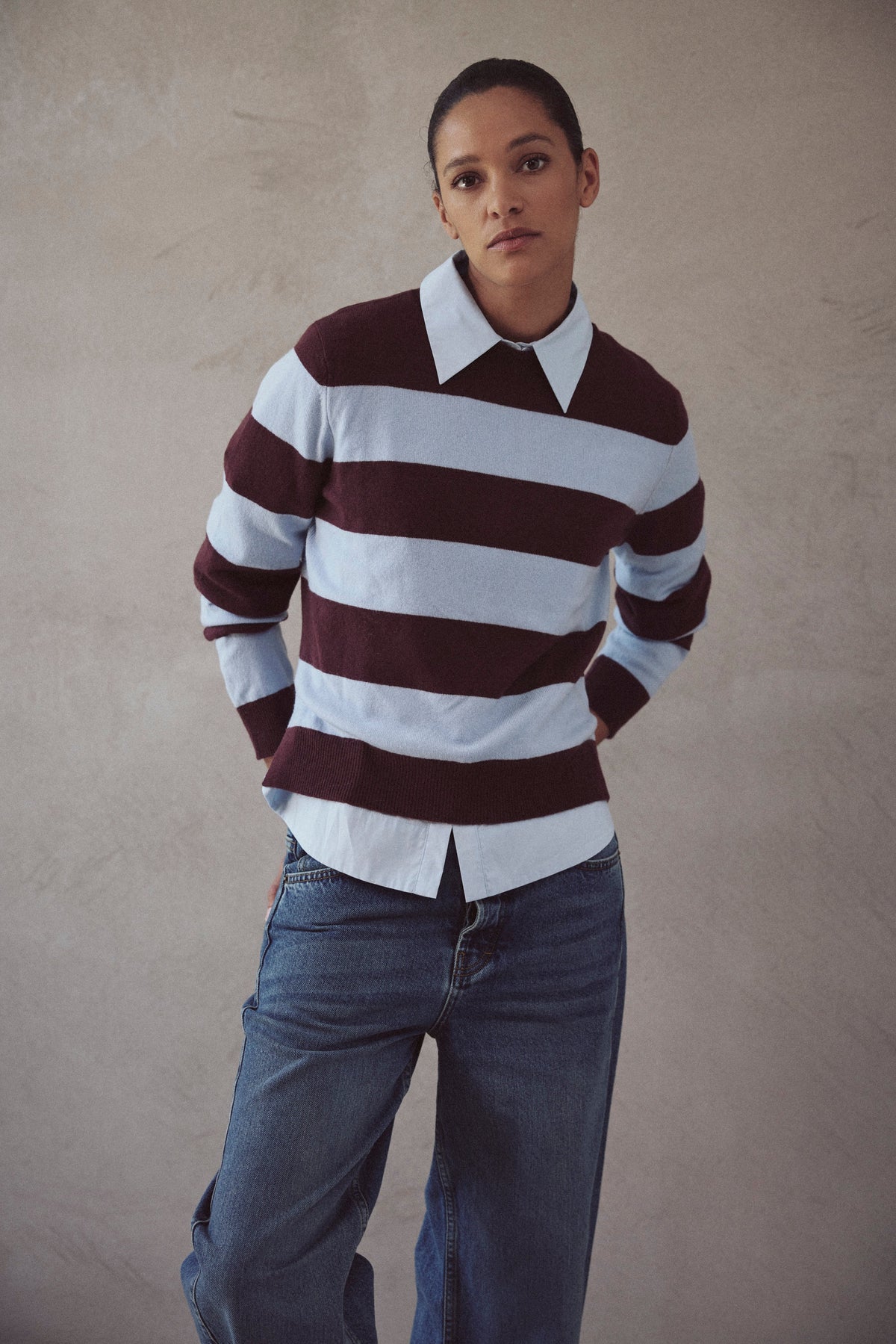
A good example is the Cora Alpaca Blend Short Sleeve Striped Jumper over the Olivia Oversized Poplin Shirt in powder blue, with the Billie Barrel Leg Trousers in olive and a lace trimmed vest underneath. The Cora adds interest and texture, and the Olivia brings sharpness, shape and structure. With the Cora off, the outfit still works, and the olive Billie with the powder blue shirt makes a lovely, slightly unexpected contrast.

The vest is a base layer for the cooler months, and with the Billie it makes an outfit of its own. With the outer layers off and a heel added, it becomes something you could wear out in the evening without getting changed. The Maya Rib Jersey Vest does a similar job as a base layer, and it works right through the year.
Small adjustments help the layers work together, such as tucking the Olivia in rather than leaving the back out. It is worth playing around with cuffs and tucks too, because there is no need to wear things as they come.
Layering as a ladder
The next tip is to think of layering as a ladder, starting with fine layers and keeping the bulk for the top. Layering finer pieces under just one bulky piece is much better than layering lots of bulk. Light layers are more useful than bulky ones, both for warmth and for making outfits. They matter even more during menopause, because one can come off quickly and the outfit still works, as our guide to dressing for menopause explains.
The fine layers are the vest tops, the Gwyneth Fine Merino Roll Neck and the Iggy Sheer Rib Jumper. The Gwyneth is an ultra-fine merino that is not itchy and helps regulate your temperature. It ended up in almost every outfit while we were styling the new season for the shoot and the launches. The Alex Cashmere Blend Jumper is heavier than both, but still a lighter layer. Our merino wool guide explains why such a fine yarn keeps you warm without adding bulk, and our guide to styling a sheer jumper covers what to wear under the Iggy.
The bulky piece goes on last. A good choice is the Ayla Wool Blend Reversible Jacket, which reverses from charcoal to light grey and works well worn open, for a flash of the contrast colour. With the Dora Wide Leg Trousers it has the feel of a grey blazer, while with the Billie it does a more casual job.

Layering one colour is an easy option too, with a slightly different effect, and simply layering lots of grey gives a polished head to toe charcoal look. If you cannot wait to wear a chunky knit like the Blythe Funnel Neck Cropped Jumper, it works as an accessory in early autumn, draped round your shoulders rather than worn as a layer under your jacket.
Use a deliberate mismatch
Another tip is to pair layers that say different things, because the contrast makes an outfit more interesting. The obvious layer is not always the right one.
The Cora over the Olivia is one example, a cosy, textured knit over a structured shirt. The Camille Cashmere Blend Striped Jumper does the same over the Olivia, which is how we styled it for the shoot, with the smarter cotton poplin shirt against a more relaxed, softer jumper.
A blazer works the same way. The obvious layer under the Teyha Tweed Blazer in houndstooth is a grey knit or a T Shirt, but the Jules Striped Blouse brings more contrast, something for a party under something for every day. The silver sits beautifully with the grey houndstooth, and with any contrast like this, the colours still need to work together.

The Georgia Double Breasted Blazer in navy pinstripe usually suggests a shirt and an office. With a simple T Shirt, the Dora and a white platform trainer it feels more casual, while the Gwyneth in black underneath brings something softer to something sharp and more masculine. The Orla Faux Leather Shirt does the same, with the toughness of faux leather against the femininity of the Cleo Satin Lace Cami.
How to layer for proportion
Layers change the shape of an outfit too, and as well as adding warmth and interest, layering can alter its whole proportions.
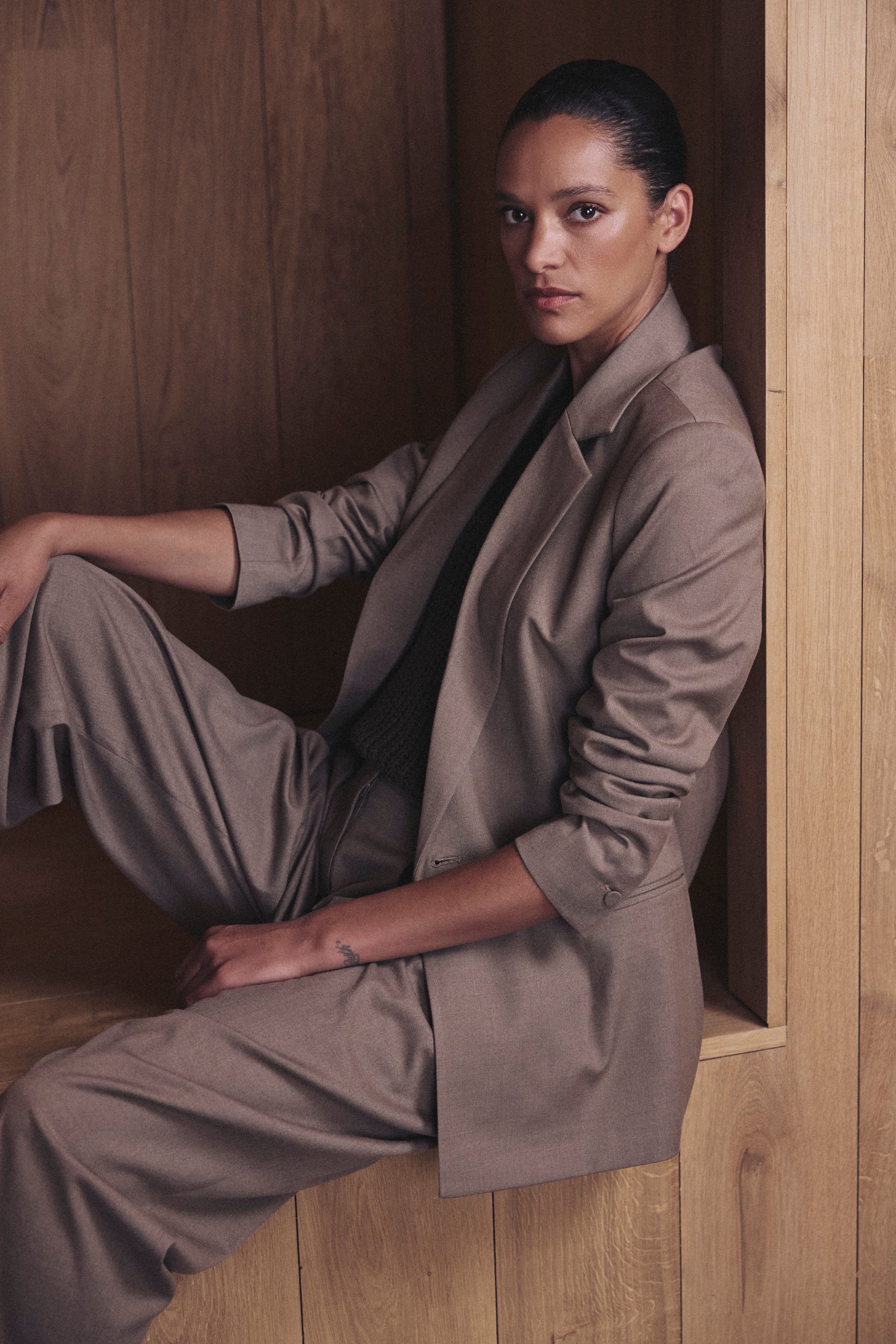
A layer worn open over a contrasting one creates a long vertical line through the middle of the outfit, which breaks up the top half and adds length. The Etta Bib Shirt under a black blazer shows how it works, with the stark black and white making the line clear and the bib front adding to it. It works particularly well if you have a bigger bust, or a shorter body and want to lengthen your top half. A little of the shirt cuff showing under the blazer sleeve makes the outfit feel more finished.

The stronger the contrast, the clearer the line, so monochrome works well, as does the Sadie Denim Shacket open over a brighter colour such as the Iggy in burnt orange.
Unless it is an open jacket, the top layer also sets where your waist appears. If an oversized shirt underneath loses definition in your outfit, a slightly shorter knit such as the Cora over the top draws the eye a little higher, to where your natural waist might sit. To raise it further, the hem of the knit can be rolled under, and because the Cora has texture, it stays put.
Use layers as accessories
A layer does not always have to be about warmth. A white T Shirt under a crew neck jumper does the job of a necklace, sitting next to your face, reflecting light onto it and drawing the eye up. It is particularly useful under a jumper in a colour you would not usually wear.
A Skylar Shoulder Pad T Shirt under a knit adds a soft structure at the shoulder. A little shoulder structure can help clothes hang and drape better, particularly as our posture changes over the years, and there are more ideas for wearing one in the guide to our shoulder pad T Shirt.
A jumper tied round your waist does the job of a belt. One example is the Camille tied round the waist of the Robyn Modal Open Neck Sweatshirt and Elsie Modal Wide Leg Joggers. The joggers have no belt loops and would look odd with a belt, but a jumper round the waist in the same colours does what a belt does, drawing the eye.

A denim shirt can do the same job. The Joni Denim Shirt was designed to be good for layering, so it is not too bulky or oversized, and tied round the waist it adds a little cool to an outfit.
A light knit knotted over the shoulders can stand in for a long necklace. With the Billie and the Cora in gingerbread, an Iggy knotted over the top breaks up the horizontal lines and creates a V over the Cora’s crew neck. The Iggy works particularly well for this because it is so light. Our guide to how to style a jumper has more ways to wear a knit as an accessory.
How to layer clothes for winter
Once the temperature really drops, the chunky knits that sat round your shoulders in early autumn can go on as a layer, as the one bulky piece over your finer layers. In winter the ladder simply gains a rung, because one bulky piece is usually enough until it gets really cold, and then there is room for a second. Our layering favourites collection gathers more pieces for layering through the colder months.
Frequently asked questions
How do you layer clothes without looking bulky?
Layering without bulk comes down to fine layers, such as a rib vest, a fine merino roll neck and a sheer rib knit, with only one bulky piece over the top. A slightly shorter knit over a longer shirt also draws the eye to the waist, so the outfit keeps its shape.
How many layers should you wear?
Until it gets really cold, one bulky piece is usually enough, and after that two can work. Fine layers underneath, such as a rib vest, an ultra-fine merino roll neck or a lightweight knit, add warmth without the bulk, and whatever is left when a layer comes off should still look like a finished outfit.
How do you layer clothes for winter?
For winter and cold weather, build up from fine layers such as a rib vest, an ultra-fine merino roll neck and a cashmere blend jumper, with one bulky piece on top, such as a chunky knit or a wool blend jacket. Once it is really cold, a second bulky piece can join the first, such as a chunky knit under the jacket.
What is a deliberate mismatch in layering?
A deliberate mismatch pairs layers that say different things, such as a relaxed jumper over a structured shirt, a party blouse under an everyday blazer, or a faux leather shirt over a lace cami. The contrast makes the outfit more interesting than layers that all match in mood.
How can a layer work as an accessory?
A layer can do the job of an accessory. A white T Shirt under a crew neck reflects light onto your face like a necklace, a jumper tied round the waist draws the eye like a belt, and a light knit knotted over the shoulders creates a V like a long necklace.
How do you layer clothes stylishly?
Stylish layering starts with making every layer a finished outfit with a job of its own, and with treating layering as a ladder, from fine layers up to one bulky piece. A deliberate mismatch makes an outfit more interesting, layering for proportion can change its shape, and layers can also work as accessories.

Leave a comment
This site is protected by hCaptcha and the hCaptcha Privacy Policy and Terms of Service apply.