

How to choose a blazer: the modern women's guide
Written by Hayley Thomas
A great blazer is one of the hardest-working pieces in a modern wardrobe. It sharpens denim, gives shape to dresses and makes even the simplest T Shirt feel intentional. The right one is not about looking formal. It is about finding cut, fabric and proportion that make getting dressed feel easier. We want to demystify the art of dressing well and help you find pieces that offer quiet impact. When you understand the mechanics of cut, drape, and fabric, finding the perfect tailoring becomes an absolute joy.

Understanding the modern blazer for women
The conversation around tailoring has shifted significantly in recent years. We no longer view a jacket purely as a rigid corporate uniform reserved for the boardroom. Today, when shopping for a blazer, women look for an elevated essential that bridges the gap between smart and relaxed. It provides a clean line that pulls an outfit together with minimal effort. Browsing a considered range of women's blazers makes it easier to find the cut and fabric that fits your personal aesthetic.
The secret lies in finding the right proportion and drape for your personal style. A beautifully constructed jacket acts as a foundation piece that elevates everything else you own. It allows you to wear your favourite casual pieces while still feeling entirely put together and ready for the day.
How to choose a blazer by silhouette and cut
The cut of your jacket dictates the entire mood of your outfit. A single breasted design offers a clean, streamlined finish that works beautifully left open over a fine knit or a crisp cotton shirt. On certain frames, single button styles can occasionally bow outward when fastened. In this case, an edge to edge design or a strategically placed double breasted cut often sits flatter against the chest and creates a smoother line.
Oversized versus soft tailoring
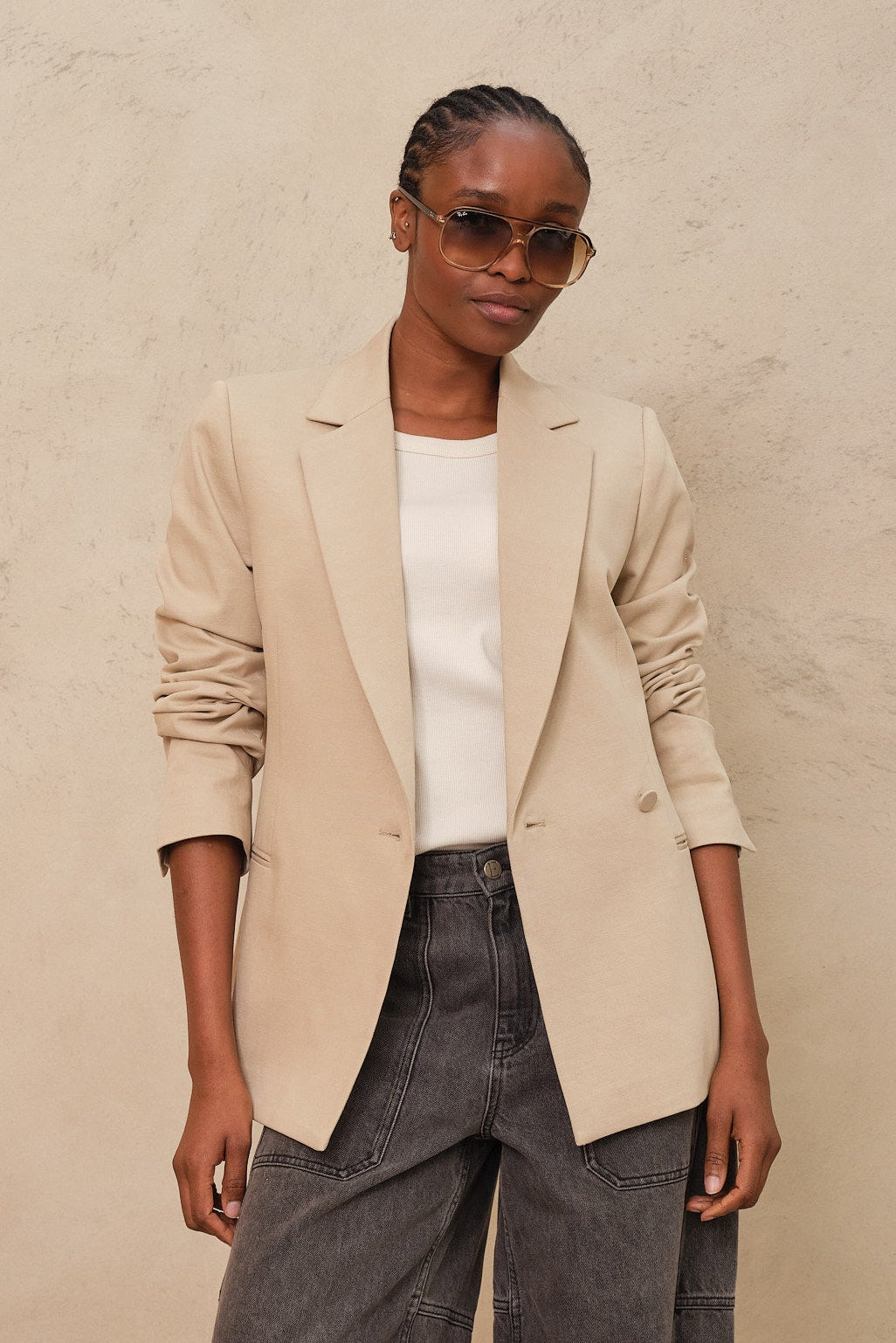
An oversized cut brings a relaxed, contemporary edge to your wardrobe. It pairs perfectly with straight leg jeans or fluid slip skirts, offering a wonderful contrast in volume. Soft tailoring offers a closer fit through the waist and shoulders, creating a sharper, more defined shape. Both silhouettes have their place in a modern classic wardrobe, depending entirely on the balance you want to achieve with your outfit.
The fit checklist for a considered purchase
Fit is where a good jacket becomes a great one. When choosing tailoring, pay close attention to the construction details. A well cut piece should feel comfortable and allow you to move freely throughout your day without constant adjustment. Try it on in the way you will actually wear it. Stand naturally, fasten the button, sit down, lift your arms and check the back view. If it pulls across the shoulder blades, rides up when you move, collapses at the chest or needs constant rearranging, it is probably not the right cut for you.
- Check the shoulders: The seam should sit exactly at the edge of your natural shoulder line to provide proper structure.
- Look for high armholes: A higher armhole actually provides more movement than a loose, low cut one, preventing the entire jacket from lifting when you raise your arms.
- Assess the sleeve length: The cuff should end just above the base of your thumb, allowing a sliver of your shirt or knitwear to show.
- Test the closure: Even if you plan to wear it open, the jacket should close without pulling across the back or chest.
What a tailor can actually alter
Buying a jacket often involves a slight compromise, but knowing what a tailor can alter saves costly mistakes. Shortening sleeves or taking in the waist are straightforward adjustments that refine your silhouette beautifully. Altering the shoulder width is a complex, expensive job that rarely yields a perfect result. If the shoulders do not fit perfectly off the peg, it is always best to leave the jacket on the rail.
Selecting fabrics for the British climate
The fabric dictates how a jacket drapes and how it performs across different seasons. Traditional woven wool offers beautiful structure and longevity, making it a reliable foundation piece for most of the year. According to British Wool, pure wool fibres have a natural resilience that allows them to spring back after creasing, which is why a well made wool blazer keeps its shape through long days of sitting, standing, and commuting. For a softer approach, Ponte di Roma is a thick double knit fabric that delivers the sharp look of tailoring with the ease and stretch of a cardigan. It is an excellent choice for desk work or long commutes where comfort is paramount.
Summer fabrics and relaxed textures
As the weather warms, your tailoring should adapt to the changing climate. Linen and cotton blends offer a breathable alternative to heavy wool, bringing a relaxed, textural element to your outfits. Linen naturally creases, which is part of its charm, but choosing a linen and cotton blend reduces the severity of the wrinkles. These lighter fabrics look incredibly elegant when worn over a simple t shirt and tailored trousers for a smart summer city look.

Linings and construction details
The inside of your jacket matters just as much as the outside. Fully lined jackets slip easily over knitwear, but synthetic linings can trap heat during a busy commute. Look for breathable linings like viscose or cupro to maintain a comfortable temperature throughout the day. Be cautious of cheaper jackets that use glued interlining, known as fusing, to create stiffness. This glue can break down and cause permanent bubbling on the fabric surface after exposure to heavy rain or poor dry cleaning.
Styling details that elevate your look
Small styling decisions completely transform the finish of your outfit. Pushing up your sleeves instantly relaxes a formal jacket and draws the eye to your waist, creating a softer silhouette. To keep silky lined sleeves from slipping down, use a clear hair elastic hidden in the folds of the fabric. This simple trick maintains the drape and keeps the sleeves securely in place all day without feeling restrictive.
The button swap upgrade
Hardware is a subtle indicator of quality on any garment. If you find a jacket with a beautiful cut but underwhelming plastic buttons, consider a quick upgrade. Swapping standard buttons for horn, tortoiseshell, or brushed metal elevates the entire piece instantly. It is a simple alteration that gives a high street find the quiet impact of premium tailoring.
Occasion dressing and professional polish
Tailoring remains the easiest way to command a room with quiet confidence. Whether you are preparing for professional headshots or stepping into a boardroom, a well cut jacket communicates authority. As Stylist has noted in its coverage of the modern working wardrobe, today's blazer is softer, roomier, and designed to move with you rather than hold you in place. You want a garment that offers polish without sacrificing your comfort.
The modern trouser suit
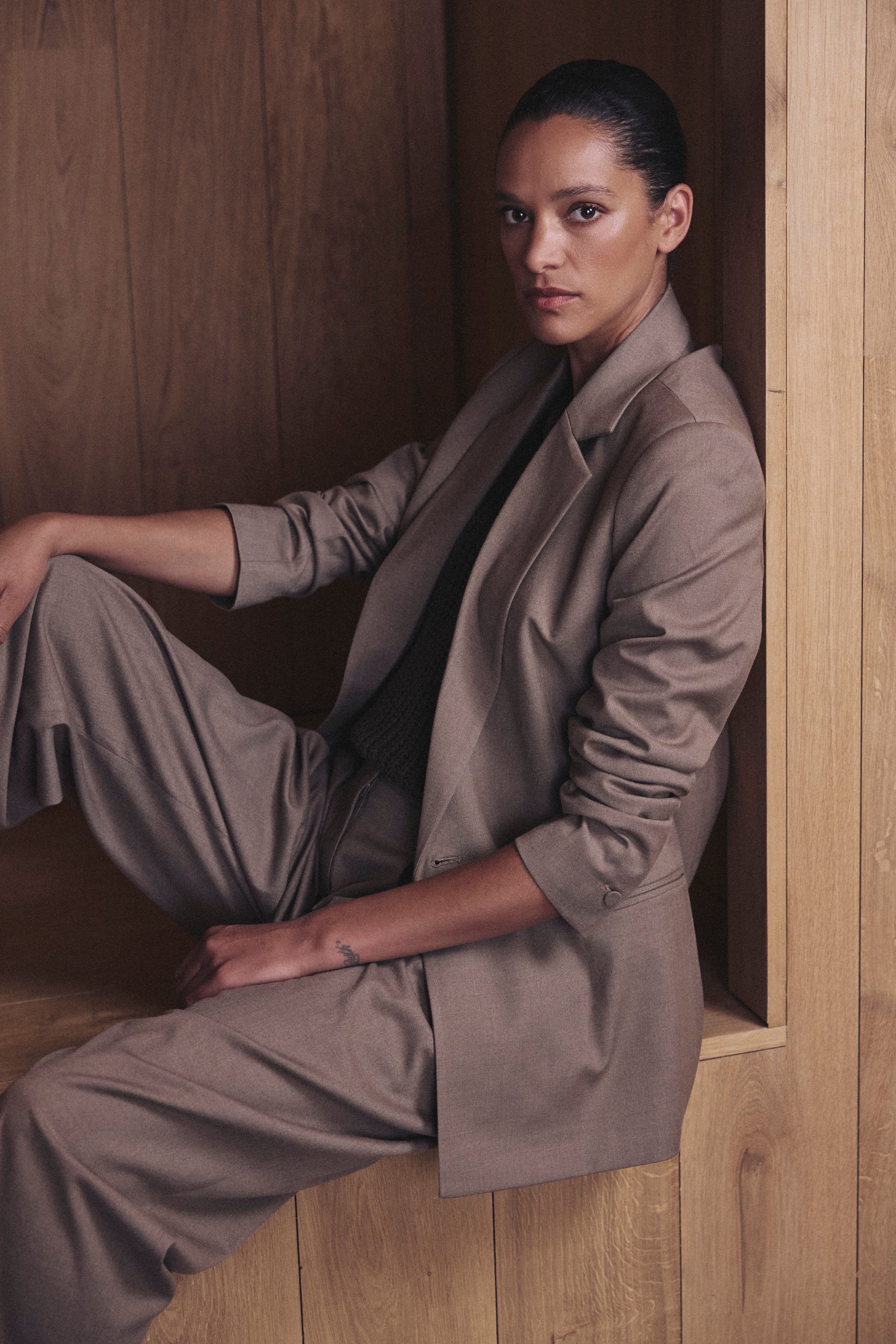
Wearing a matching trouser suit creates an elongated, unbroken line that looks incredibly smart. To keep the look contemporary, pair a soft tailored jacket with wide leg trousers. Layering a fine gauge merino knit or a crisp cotton t shirt underneath softens the formality of the suit. This approach feels relevant and relaxed, stepping away from the stiff corporate uniforms of the past.

Dresses and jackets: a lesson in proportion
Layering tailoring over a dress is a beautiful way to extend your wardrobe across the seasons. The success of this combination relies entirely on proportion and balance. A longline, oversized jacket looks wonderful over a bias cut silk slip dress, creating a striking contrast between structure and fluidity. Exploring the right dresses to pair with your tailoring opens up a whole new rotation of outfits for every occasion.
Managing volume and length
If you are wearing a dress with a voluminous skirt or a bold print, a cropped or fitted jacket helps to anchor the look. It defines your waistline and prevents the fabric from overwhelming your frame. When styling a blazer with dresses, think about where the hem hits. The jacket should either end sharply at the waist or fall past the hips to maintain a clean, considered silhouette.
Colour and texture in your foundation pieces
Neutrals form the backbone of a hard working wardrobe. A camel, navy, or soft grey jacket pairs beautifully with almost everything you already own. These shades offer a quiet elegance that transcends seasonal shifts and passing fashion moments. However, tailoring is also a wonderful vehicle for introducing richer tones into your daily rotation.
Making a statement with colour
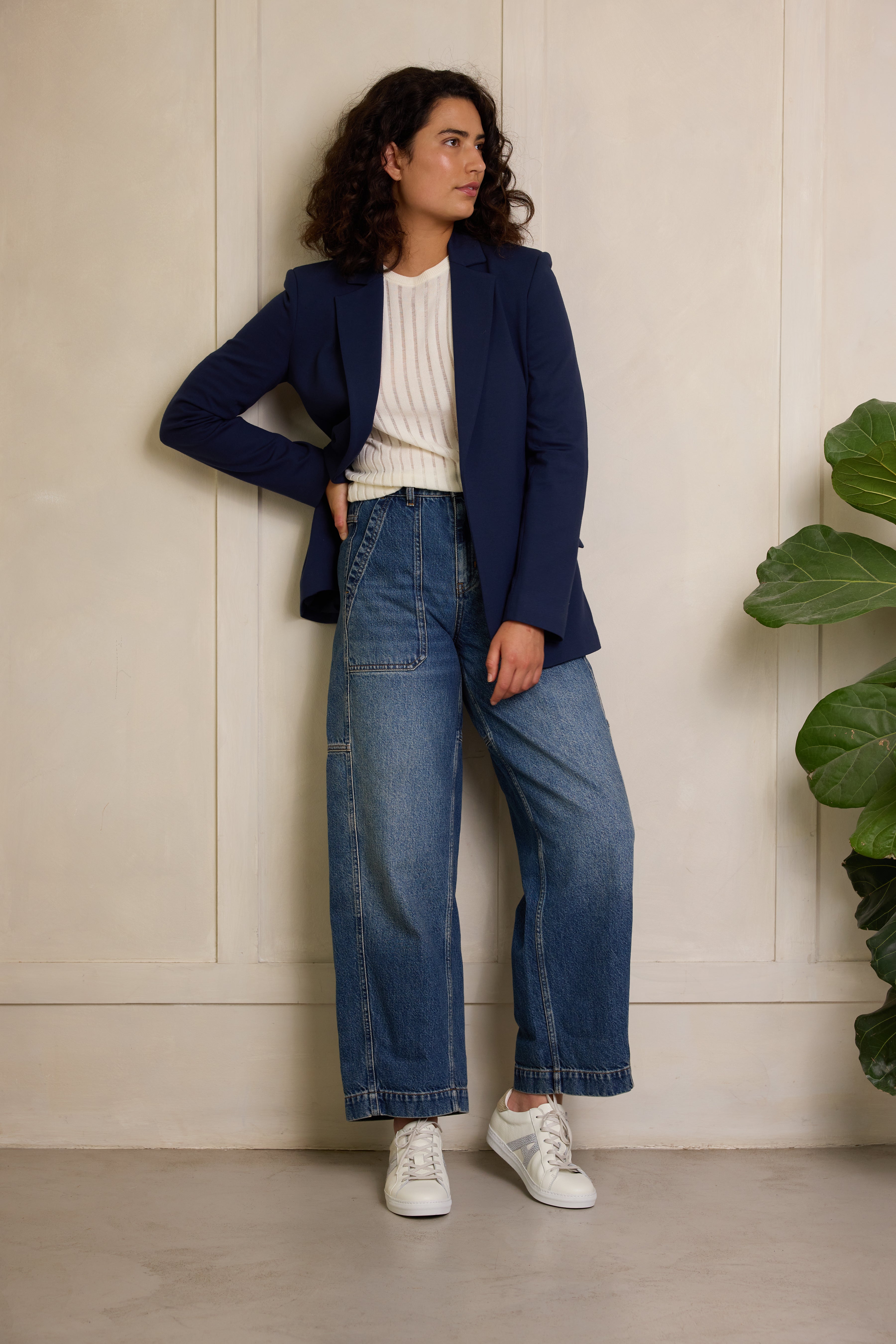
A bright turquoise or deep emerald jacket brings immediate energy to simple denim and neutral knitwear. When wearing a strong colour, keep the rest of your outfit understated. Let the jacket take centre stage by pairing it with a white t shirt and classic straight leg jeans. This creates a balanced, considered look that feels intentional rather than loud.
The capsule wardrobe approach to tailoring
Rebuilding your style in your thirties, forties, or beyond often involves stripping back the excess. A capsule wardrobe relies on a few exceptional pieces that work beautifully together. A premium jacket is arguably the most important element of this curated approach. It acts as the unifying layer that ties disparate pieces into a cohesive, elegant outfit.
Investing in cost per wear
When evaluating a purchase, consider the cost per wear rather than the initial price tag. A beautifully constructed wool jacket might require a higher initial outlay, but its longevity makes it a wise investment. You will reach for it week after week, year after year. This considered approach to shopping ultimately builds a wardrobe that serves you better and reduces daily decision fatigue.
Caring for your hard working piece
Proper care extends the life of your tailoring and maintains its crisp silhouette. Dry cleaning should be kept to an absolute minimum, ideally only once or twice a season, as harsh chemicals break down natural fibres over time. Instead, use a steamer to refresh the fabric and remove creases between wears. Always hang your jacket on a wide, contoured wooden hanger to support the shoulder structure and prevent the fabric from stretching out of shape.
Dealing with fabric pilling
Even premium natural fibres can experience slight pilling or bobbling in areas of high friction, such as under the arms. This is a natural characteristic of soft wools and cashmere blends, not necessarily a sign of poor quality. A gentle fabric comb easily removes these small fibres, restoring the smooth finish of your garment. Regular maintenance keeps your tailoring looking sharp and extends its lifespan significantly.
Building a wardrobe with intention
A great wardrobe is built slowly with pieces that bring you joy and confidence. Finding the right tailoring is about understanding proportion, fabric, and the small details that make a garment a joy to wear. When you invest time in finding a jacket that truly fits your lifestyle, it becomes a reliable friend in your wardrobe. It brings ease and polish to your daily routine, allowing you to step out the door feeling entirely yourself.

Leave a comment
This site is protected by hCaptcha and the hCaptcha Privacy Policy and Terms of Service apply.